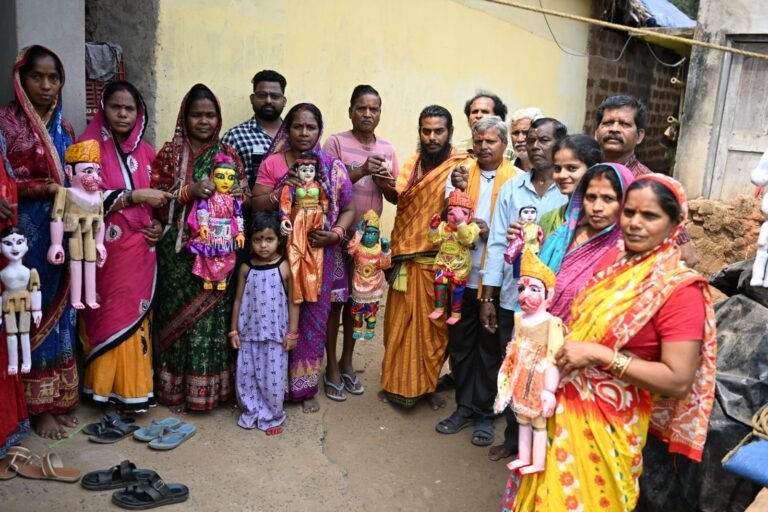

Bhubaneswar, Mar 16: The quiet village of Raidihi in Dhenkanal district has emerged as the last major stronghold of the traditional puppet dance “Kandhei Nacha”, a folk art form now facing the threat of fading into history. The issue came into focus during the 35th edition of Dhenkanal Heritage Walks held on Sunday, where around 30 participants, led by convener Suresh Prasad Mishra, visited the village to highlight its cultural significance.
The roots of Raidihi’s puppetry tradition date back to 1952 when two villagers, Shatrughana Jena and Banshidhar Dhala, encountered puppet storytelling during a visit to Ganjam district. Inspired by the art form, they introduced it in their village, gradually transforming Raidihi into a vibrant hub of puppetry.
Over time, the craft became deeply integrated into village life. Traditionally, fathers gifted a Kandhei Nacha puppet set to their daughters at the time of marriage, providing them with a means of livelihood in their new households.
India has four main styles of puppetry—string (Suta), rod (Gopa), shadow (Chhaya) and glove (Hastada). Odisha is unique for preserving all four, with the string puppet tradition, known as Suta Kandhei, thriving primarily in Raidihi.
Currently, the village is home to 17 active puppet troupes, each comprising eight to ten performers who travel across the state to stage traditional storytelling performances.
Despite its rich legacy, the art form is struggling due to declining patronage, economic challenges and the growing influence of digital entertainment. Younger generations are increasingly reluctant to continue the tradition.
To protect this unique cultural heritage, heritage enthusiasts and villagers have urged authorities to declare Raidihi a “Heritage Puppet Village”, a step they believe could boost tourism and ensure institutional support for preserving this living tradition of Odisha.
About the Author