Bhubaneswar, Aug 17: Odisha’s heritage extends far beyond royal chronicles, monumental temples and protected archaeological sites. Its cultural legacy also survives in caves, village festivals, palm-leaf manuscripts, wooden images, sacred landscapes and oral traditions passed down through generations.
This rich and diverse heritage came into focus during heritage walks organised on Sunday in the Chilika-Barakul region and Dhenkanal, offering participants an opportunity to explore lesser-known cultural and historical sites.
Second Chilika Heritage Walk
The second Chilika Heritage Walk (CHW) marked an important step towards promoting community-based heritage interpretation in a region better known for its ecological significance. Organised by the ODI ART Centre under the leadership of Bisheswar Das and Sushant Kumar Dash, the walk began near the Maa Narayani Temple.
The temple’s present structure belongs to a later period, while the original shrine is believed to have existed before the 12th century AD. Some archaeological references associate its foundational elements with the Bhaumakara period. The shrine was later extensively renovated by the Khallikote rulers in the early 18th century.
Participants subsequently visited Debijhara near Barakul, a picturesque reservoir surrounded by the Eastern Ghats. More than 20 students from Venkateshwar English Medium School, Barakul, and five students from Khallikote Art College documented their experiences through writings and paintings.
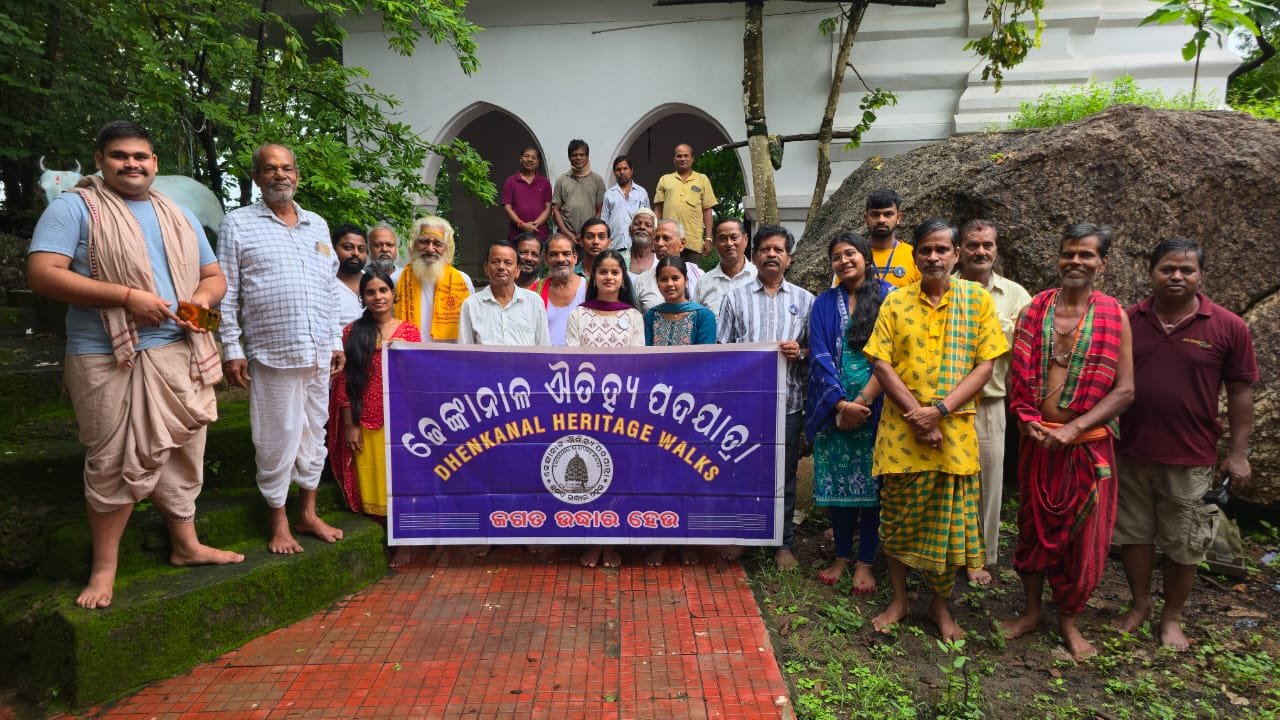
40th Dhenkanal Heritage Walk
Meanwhile, the 40th Dhenkanal Heritage Walk was organised at the historic Gumpha Jagannath Temple, also known as Harihara Ashram, in Gandia block under the leadership of convenor Suresh Prasad Mishra.
Participants explored the Jagannath and Shiva temples, caves and surrounding natural landscape. The site is believed to have been associated with Jagannath culture for nearly two centuries. According to local tradition, a saint once installed the Chaturdha deities inside a cave and worshipped them. Later, local devotees built a temple and continued the rituals, including the annual Rath Yatra.
The two walks highlighted different dimensions of Odisha’s living heritage—from sacred caves and Jagannath traditions in Dhenkanal to temple culture, folk art and natural landscapes around Chilika. Such initiatives can help connect younger generations with local history and encourage communities to become custodians of their cultural heritage.
About the Author